


How To Elegantly Walk on Eggshells (in Heels)
- tisha180
- Jan 16
- 16 min read
Updated: Jan 18
When Safety Becomes Conditional
Disclaimer
This blog shares personal opinions and general information and is not medical or mental health advice. It does not create a provider-patient or therapist-client relationship. Consult a qualified professional for guidance. If you are in crisis, call 911 or call or text 988 (U.S.).
Where Did My Voice Go?
Maybe it was when you were six years old. Or perhaps it was last year. Or last week? Maybe a minute or two ago. Somebody told you that you were being dramatic or acted like you loved the attention. They responded to you like your instincts were a cute hobby. A little “woo-woo” even. You slowly feel your truth become negotiable. Whenever it was, it made you a tiny bit less. It may have made you feel lighter, but not in that GLP-1 way, in a hollow, empty sense.
In some relationships, somewhere between the first laugh and the first apology, a relationship can start teaching your nervous system new rules, and it does it quietly. The room gets smaller. Your voice gets quieter. Your body learns that silence buys peace. Fear becomes a new language spoken with closed lips.
I am talking to you, one person reading this, because you landed on this page and you've continued reading this blog. Maybe out of curiosity. Maybe it's something else. You understand a scenario where you pay for peace with the currency of silence, and shame sits high on the invoice.

People rarely want to be cast in the play life calls abuse. Especially when a society treats an abuser as shameful, then turns around and stains the abused with the real shame, fluorescent and messy and heavy with regret. In movies, books, and lectures, people claim they learn from those who have been abused. Once their story is packaged and published, they praise their courage. Then reduce them to pity.
But what if acknowledging how small we are becoming is how we get big again?
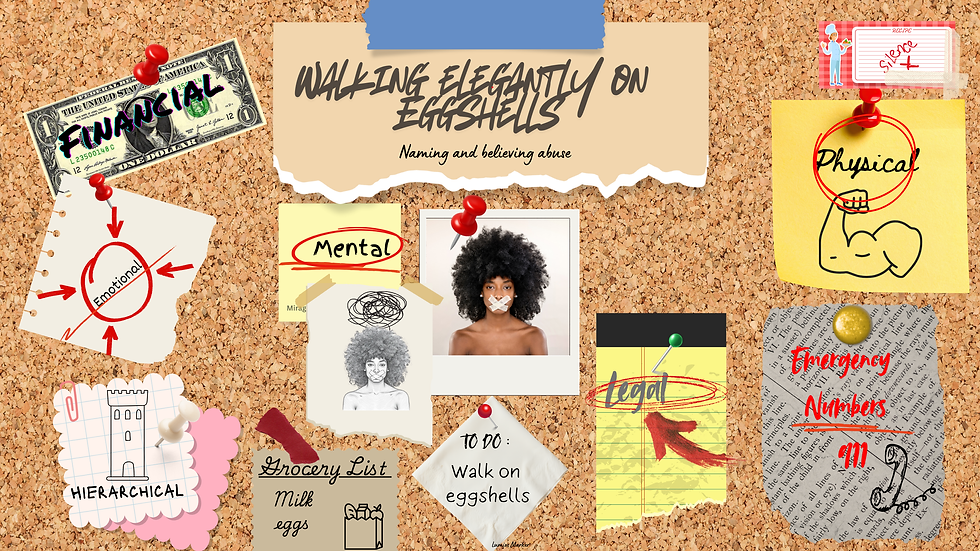
Abuse and Its Many Mustaches

It is rarely loud at the beginning. It comes in quietly, as a tone, a glance, a
withheld kindness, a consequence that only appears when you try to be fully yourself. It pays no attention to age, experience, or education.

Sometimes it wears costumes, and it does not always show up as a bruise you can photograph or fit perfectly in a restraining order paragraph. The National Domestic Violence Hotline calls relationship abuse a pattern of behavior used to gain or maintain power and control over an intimate partner. It can include physical, sexual, emotional, and financial abuse, or threats that influence another person.

If you are reading this as a female-identifying individual, you've probably heard the statistics. The American Academy of Pediatrics has written that intimate partner violence is pervasive in the U.S., with high lifetime prevalence reported by those identifying as female. But, even if you are not female identifying, you still deserve safety. Abuse can happen to anyone, and it thrives on isolation, not on demographics. California’s DV-500 information sheet, used in state court, calls out abuse as spoken, written, or physical, and includes threats, stalking, harassment, destroying personal property, unwanted or repeated contact, intimidation, and disturbing the peace.
Power and control wear a bold lip.

Physical Abuse
Physical abuse is the form people recognize fastest because the evidence is in your face. The CDC states physical abuse includes hitting, pushing, choking, restraining, throwing objects, using weapons, or blocking you from leaving a room. Sometimes it includes “unfortunate accidents, out of anyone's control", a hot temper, the result of a sharp tongue, or a hard surface.
Emotional Abuse
Emotional abuse is the slow erosion of your inner ground. The National Domestic Violence Hotline describes emotional abuse as nonphysical behavior used to control, isolate, or frighten you. It can look like threats, humiliation, intimidation, excessive jealousy, constant monitoring, manipulation, or dismissiveness.
Mental Abuse
People use “mental” in different ways, so I am naming it plainly: mental abuse is what happens when someone targets your thinking, your memory, your decision-making, your grip on your own reality. Gaslighting is a classic example. The National Domestic Violence Hotline describes gaslighting as emotional abuse that can make you question your feelings, instincts, and sanity, which increases the abusive partner’s power and control.
Financial Abuse
Financial abuse is control with literal receipts. It can be when an abuser controls finances to prevent a partner from having the ability to support themself and may include restricting access to money, hiding money or shared assets, lying about income or savings, sabotaging work and/or your ability to work, demanding account logins, running up debt in your name, hiding documents, or making you beg for what you earned. The National Domestic Violence Hotline describes financial abuse as hard to see and devastating, and they include safety planning steps centered on your control over your own assets and information.
Legally, U.S. law defines “economic abuse” in the context of domestic violence and dating violence as behavior that is coercive, deceptive, or unreasonably controls or restrains a person’s ability to acquire, use, or maintain economic resources, including restricting access to money, assets, credit, or financial information.
Legal Abuse
Legal abuse is when the court system turns into an extension of control. The National Domestic Violence Hotline describes litigation abuse as using the court system to maintain power and control, often in divorce or custody contexts or whenever civil protections are involved. WomensLaw.com points to patterns including filing repeated motions without a legal reason, delaying proceedings, or forcing a person back into court again and again.
Stalking
Stalking is not romance, not persistence, not love with better transportation. The CDC describes stalking as a pattern of unwanted attention and contact that causes fear or safety concerns. NNEDV also places stalking inside the broader goal of power and control.
Technological Abuse
The CDC notes that some forms of intimate partner violence can be carried out electronically. New York State’s Office for the Prevention of Domestic Violence describes technology-facilitated abuse as the misuse of technology to harass, intimidate, stalk, or manipulate to maintain power and control. NNEDV’s Safety Net Project focuses on how technology affects safety and privacy for victims of domestic and sexual violence.
Hierarchical Abuse
I've coined this hierarchical abuse because some harm is built on status. This includes tokenism and can extend beyond intimate partners. The relationship is intimate, nonetheless. That person who controls your employment, social status, or even your grades. They could sign your checks or could be privy to private (real or made-up) personal information about you (this could include someone in HR or a neighbor). They could be close in relationship and/or proximity. Those who may claim they are smarter, more educated, more important, and more believed, could use that ladder as a weapon.
OSHA describes workplace violence broadly as any act or threat of physical violence, harassment, intimidation, or other threatening behavior at the work site. The EEOC explains that harassment becomes unlawful when enduring offensive conduct becomes a condition of continued employment, or when the conduct is severe or pervasive enough to create an intimidating, hostile, or abusive work environment.
In this exchange, the currency for peace is compliance.
Boomerang Abuse
Boomerang Abuse is when someone uses an abuse you have shared with them as a tool, claiming you are inflicting the abuse you survived on them, or duplicating a tactic that worked against you before. You hand someone your history so they can understand you, and they throw it back as a weapon, and they turn your survival into their script. To a weak mind or uncrafted soul, it's an easy win, and you rarely know early on that you've given them the weapons to hurt you.
WHEN FEAR FREEZES YOU

Abuse does more than just hurt a body; it trains it.
Trauma educators often describe survival responses as fight, flight, freeze, and fawn, with freeze capturing the moment the body goes still because stillness feels safer than movement. When fear is used strategically, it can make you immobile, not because you are weak, but because your system is trying to keep you alive.
This is also why people who look “strong” from the outside can feel unrecognizable on the inside. The familiar devil you know starts sounding like a plan, and unfamiliar freedom can feel like a risk you do not have the energy to manage.
"YOU’RE BEING DRAMATIC"
“You’re being dramatic” is one of the cleanest blocks to a healthy life because it attacks your interpretation, not your behavior. When your mind is framed as a personality flaw, you question every choice you make. Your nervous system is constantly rattled, and eventually, you don't know what it feels like any other way.
When someone (or you) insists you are too sensitive, too emotional, too intense, too much, the subtext screams: "Shrink!"

INTIMACY USED AS AMMUNITION
Intimacy is supposed to be how humans build a home in each other. In a new or budding relationship, you share stories, fears, past harm, soft spots, and private hopes. With an abuser, that information can become a map of where to aim.
Abuse can appear as subtle threats, personal slights, or public humiliation. Sometimes, a quiet reenactment of the worst thing you ever survived, replayed as a joke, a punishment, or a test of loyalty.
It can feel like a trap is built out of your own honesty.
And it's here that isolation starts feeling like relief because to many, solitude may seem less painful than betrayal.
Don't give up. Intimacy can be rebuilt (in increments). Work on forgiving yourself. Your intimacy should be earned. Your price should be high and access to your inner life should only be available through consistency across time, rather than an intense moment of chemistry. Privacy can hold dignity, and being open doesn't require being fully exposed. Truly "skilled" abusers often cultivate a private stage and a detached eye is important to spot patterns you cannot see up close. Remember those weird pictures of the 90s where you had to squint to see what was really there? People who love you will tell you the truth even when you don't want them to.
Some people are abusers, while others may have abused someone, and either way, they belong in the rear-view mirror. People don't change unless they know they should change and take the steps to do so. Recognize the difference.
WHY DO PEOPLE STAY
People stay because control rearranges reality.
The DOJ Office on Violence Against Women describes domestic violence as a pattern used to gain or maintain power and control. The National Domestic Violence Hotline’s Power and Control Wheel frames abuse as continual behaviors that keep someone in the relationship, with physical and sexual violence reinforcing those tactics.
California’s DFPI notes that economic barriers to leaving are real, and a lack of access to economic resources is often why victims feel they have no choice but to stay. The National Domestic Violence Hotline describes financial abuse as rooted in control over finances, employment, and public assistance.
The National Domestic Violence Hotline also describes litigation abuse as using the court system to maintain power and control, often in divorce or custody contexts.
And fear can live in the body as freeze, where the system chooses stillness over escalation.
Even though it may look like a choice, staying can be survival under pressure. Harm builds a small world with thick walls for air.
Sometimes the pull comes from the nice or warm feelings or gestures an abuser has given you before. You want to get back to that because you know it’s there. Somewhere. But your partner, friend, or employer is not a series of nice acts. Jewelry, flowers, a social media post, or a raise; those things are not the person, and none of them should be used to trap another one.
THE EFFECTS OF ABUSE ON KIDS WHO WITNESS IT

When kids witness abuse that their parent goes through, they learn from the atmosphere even when nobody says a word.
A house can become a classroom with teachers (the grown-ups) who didn’t know they were on the clock. The lesson is not always, “This is normal.” Sometimes the lesson is, “Stay quiet, stay safe,” and that lesson can follow them into friendships, school, and adulthood.
Witnessing abuse can function as a form of harm itself, because a child’s nervous system is not separate from the room they live in.
THERE IS HOPE
In the movies, bravery is gifted from above (or some writer) at a courthouse or in a shelter. In real life, it's way more subtle. Your choices of making the same "stupid" mistake may actually be how you are coding your body for bravery. True bravery starts when you name what is happening to you and believe it without letting someone talk you out of your own perception. It only takes a moment for healing to begin.
If you minimize a situation your gut says is wrong because you think (or you've been told) you are overthinking things, that thought deserves compassion. Overthinking can be a survival skill that outlived its original emergency. I tell my children this all of the time: "You are training people how to treat you." Every time you accept abuse, you're telling that person and the world that this is the way you should be treated, accepted, and loved. It's a lie. You are worth more. Being in an abusive situation isn't your fault. But don't confuse peace or comfort with love or what's "right".
Recalling the immortal words of the Blues Brothers, "Everybody needs somebody." SHE IS HOPE LA believes in a hand up, not a handout. We are here to help single moms be the best versions of themselves they can be, so they can pay it forward.
You do not have to prove pain to deserve protection!

You aren't alone. The first step is as easy as a thought. Let's get you healthy and happy. We need you!
If you are experiencing abuse:
If you are in immediate danger, call 911 (U.S.) or your local emergency number.
The National Domestic Violence Hotline offers free, confidential support 24/7. Call 1-800-799-SAFE (7233), chat through TheHotline.org, or text START to 88788.
The Crisis Text Line is available for all ages. Text DV to 741741.
If sexual assault or sexual abuse is part of your story, RAINN’s National Sexual Assault Hotline is available 24/7. Call 800-656-HOPE (4673), text HOPE to 64673, or use their online chat.

Mirage Thrams is a single mother of three beautiful girls, a Hollywood-based writer, director, and cinematographer, and serves as Secretary and Public Relations Director for SHE IS HOPE LA.
If loving truth is wrong, she don't wanna be right. Contact: [info@sheishopela.org]
Media and partnerships: [pr@sheishopela.org]
Los Angeles, CA
The views expressed in this article are those of the author and do not necessarily reflect the views, policies, or positions of SHE IS HOPE LA.
*Emergency and Crisis Hotlines in the United States (click here for a comprehensive list)
Mental Health & General Crisis
988 Suicide & Crisis Lifeline – Dial 988 (or text 988) for 24/7 free and confidential support during mental health, suicide, or substance use crises across the U.S.. Counselors are available in English and Spanish, with interpretation in 240+ languages. (Formerly the National Suicide Prevention Lifeline.)
Crisis Text Line – Text HOME to 741741 from anywhere in the U.S. to connect with a live, trained crisis counselor via text. This service is available 24/7 and is free and confidential. (También disponible en español – envía HOLA al 741741.)
211 Helpline – Dial 211 for help finding local resources for any kind of crisis or urgent need (housing, food, mental health, etc.). 211 is a free, confidential 24/7 referral service that connects callers with locally available help across the U.S., with support in 180+ languages.
LGBTQ+ Support
The Trevor Project – Call 1-866-488-7386 (TrevorLifeline), text “START” to 678-678, or chat online for 24/7 crisis intervention and suicide prevention for LGBTQ+ youth. Trained counselors provide free and confidential support 24/7 via phone, text, and chat.
Trans Lifeline – Call 877-565-8860 to reach a peer support hotline run by and for transgender people. Operators are trans/nonbinary volunteers who provide emotional support and resources without involving emergency services. Note: Available in English or Spanish (press 2 for Spanish). Hours: Monday–Friday, 10 am–6 pm Pacific (1 pm–9 pm Eastern).
SAGE LGBTQ+ Elder Hotline – Call 1-877-360-LGBT (5428) for a free confidential hotline dedicated to LGBTQ+ older adults (and caregivers). 24/7 responders are certified in crisis response and offer support without judgment. Services available in English and Spanish, with translation in 180 languages.
Domestic & Dating Violence
National Domestic Violence Hotline – Call 1-800-799-7233 (SAFE), or text “START” to 88788, for 24/7 support if you are experiencing domestic violence or relationship abuse. Highly trained advocates are available 24/7 to talk confidentially with anyone in the U.S. affected by domestic or dating violence, offering crisis counseling, safety planning, and referrals. (Servicios disponibles en español.)
love is respect – National Teen Dating Abuse Helpline – Call 1-866-331-9474, text “LOVEIS” to 22522, or live chat online for support with dating abuse. This 24/7 service is tailored to teens and young adults (as well as their friends/family) for questions or concerns about healthy relationships and dating violence. Peer advocates provide education, emotional support, and help with safety planning.
StrongHearts Native Helpline – Call or text 1-844-7NATIVE (844-762-8483) for culturally-specific support for Native American and Alaska Native communities. This is a 24/7 anonymous and confidential helpline for domestic violence and sexual violence, staffed by advocates familiar with Native cultures and tribal resources. (Offers support in English and in some Indigenous languages.)
The Deaf Hotline – For Deaf and hard-of-hearing survivors of abuse, the National Deaf Domestic Violence Hotline provides 24/7 crisis assistance in American Sign Language. Video phone: 1-855-812-1001. Deaf advocates are available 24/7 via VP, providing culturally adept crisis intervention, safety planning, and emotional support in ASL. (Email and chat options are also available via the website.)
Sexual Assault & Abuse
National Sexual Assault Hotline (RAINN) – Call 1-800-656-HOPE (4673) to be connected with a local sexual assault service provider, or chat online via RAINN. This hotline is 24/7 and connects survivors of rape, sexual assault, or abuse (or their loved ones) with trained staff who provide confidential support and resources for healing and reporting. (En español: 1-800-656-4673 or rainn.org/es).
DOD Safe Helpline – Call 877-995-5247 or chat online for confidential support for sexual assault survivors in the U.S. military community (Service members, veterans, and DoD employees). This is the Department of Defense’s 24/7 specialized hotline, operated by RAINN, providing anonymous crisis counseling, referrals, and information worldwide for those affected by sexual violence in the military. (Accessible from anywhere via phone, online chat, or the Safe Helpline app.)
Child & Youth Safety
Childhelp National Child Abuse Hotline – Call or text 1-800-4-A-CHILD (1-800-422-4453) if you are a victim of child abuse or concerned about a child’s safety. Professional crisis counselors are available 24/7/365 via phone, text, or online chat to provide crisis intervention, information, and referrals. Support is free and confidential, and help is offered in 170+ languages.
National Runaway Safeline – Call 1-800-RUNAWAY (1-800-786-2929), or text, email, or chat via the website for any youth in crisis (or youth considering running away/homelessness) and concerned family members. This 24/7 crisis line offers compassionate, nonjudgmental support and can help with safety planning, shelter referrals, reunification, and other resources. All services are free and confidential.
National Center for Missing & Exploited Children – If you have information about a missing child or suspect a child is being sexually exploited online, call 1-800-THE-LOST (1-800-843-5678). This hotline operates 24/7 to receive tips and provide assistance to law enforcement and families in cases of missing or exploited children.
Elder Support & Abuse Prevention
Eldercare Locator – Call 1-800-677-1116 for the nationwide Eldercare Locator, which connects older adults and caregivers with local resources (like Adult Protective Services, senior services, and legal aid). Information specialists are available Monday–Friday, 9 am–8 pm ET to answer questions and help report elder abuse or neglect by routing you to the appropriate agencies. (Service in English and Spanish, with interpreters for other languages.)
National Elder Fraud Hotline (DOJ) – Call 1-833-FRAUD-11 (833-372-8311) if you or an elderly person you know has been a victim of fraud, scams, or financial exploitation. This U.S. Department of Justice hotline is staffed by case managers who assist callers in reporting fraud and connecting with resources. Hours: Monday–Friday, 10 am–6 pm Eastern. Services are available in multiple languages. (After hours, you can leave a message and get a callback.)
Human Trafficking & Exploitation
National Human Trafficking Hotline – If you or someone you encounter may be a victim of human trafficking (sex or labor trafficking), call 1-888-373-7888, text “HELP” or “INFO” to 233733, or chat via the website. Trained advocates are available 24/7 to take reports or provide help to victims. Calls are confidential, and you can get help in 200+ languages through interpreters. (You may also report tips anonymously.)
National Sexual Exploitation Hotline (CyberTipline) – To report online sexual exploitation of children (e.g. child pornography, enticement, sex trafficking), contact the CyberTipline at 1-800-843-5678 or through the online form. This tipline is operated by NCMEC in partnership with law enforcement 24/7.
Veterans & Military Crisis
Veterans Crisis Line – Dial 988 then Press 1 (or call 1-800-273-8255 and Press 1), or text 838255, to reach the Veterans Crisis Line. This is a dedicated 24/7 crisis hotline for veterans, service members, National Guard/Reserve, and their families. It provides free, confidential support from trained responders (many are veterans) for any emotional or suicidal crisis. (You do not have to be enrolled in VA benefits to use this service. Online chat is also available.)
Military OneSource Crisis Line – Call 1-800-342-9647 for 24/7 help for service members and their families on a range of issues (financial, legal, family, mental health). This DoD-funded helpline provides confidential counseling and referrals worldwide (with collect calls from OCONUS accepted). (Language interpretation available.)
Vet Center Call Center – Call 1-877-WAR-VETS (927-8387) for the Vet Center confidential call center. It’s a 24/7 helpline staffed by combat veterans and military family members, providing an understanding ear, support, and referrals for veterans and service members (and their families) who prefer to speak with fellow veterans about readjustment counseling or any personal crises.
Legal & Rights Hotlines
Housing Discrimination Hotline (HUD) – If you believe you have faced housing discrimination (based on race, gender, disability, etc.), you can call 1-800-669-9777 to reach a HUD Fair Housing specialist. They will help you understand your rights and assist in filing a complaint with the Office of Fair Housing and Equal Opportunity. (TTY for hearing impaired: 1-800-927-9275.)
Immigration Rights – MigraWatch Hotline (United We Dream) – If you witness or are impacted by immigration enforcement (ICE or CBP activity) in your community, call 1-844-363-1423. This nationwide bilingual hotline allows you to report ICE raids or harassment and receive guidance and support from trained volunteers. (Operated by United We Dream; support available in English, Spanish, and other languages as needed.)
Stop Hate Hotline – Call 1-844-9-NO-HATE (1-844-966-4283) if you have experienced or witnessed a hate crime or hate incident. The Lawyers’ Committee for Civil Rights Under Law operates this hotline to provide free legal information and resource referrals to individuals and communities facing hate-based harassment or violence. Staff can advise on reporting options and civil rights laws in your state, and help connect you with local support or law enforcement as appropriate.
VictimConnect Resource Center – Call or text 1-855-4-VICTIM (1-855-484-2846) for a national helpline that assists victims of any crime. VictimConnect’s trained staff provide confidential support, information, and referrals to services (legal, financial, counseling, etc.) for victims of domestic violence, sexual assault, stalking, human trafficking, hate crimes, fraud, and other crimes. (Available Monday–Friday, with live chat via website during business hours.)
Disaster Distress & Emergency Preparedness
Disaster Distress Helpline – Call or text 1-800-985-5990 to reach a 24/7 crisis line for anyone experiencing emotional distress after natural disasters or emergencies. This helpline, run by SAMHSA, provides immediate crisis counseling and trauma support for survivors of hurricanes, wildfires, pandemics, mass violence, etc. It’s free, multilingual, and available nationwide year-round. (Press 2 for Spanish. Deaf/HoH individuals can use their preferred relay service to connect.)
FEMA Disaster Assistance Helpline – Call 1-800-621-FEMA (1-800-621-3362) for help with federal disaster assistance (FEMA) after a declared emergency or to find disaster recovery resources. (TTY: 1-800-462-7585, multilingual services available.)
Poison Control Center – If you suspect poisoning or have a toxic exposure emergency, call 1-800-222-1222 to reach the Poison Help line. This number connects you to medical experts at your regional poison center 24/7 for immediate treatment advice for poisonings or drug overdoses. (Free and confidential, with translation services in 150+ languages.)
Accessibility & Multilingual Note: Many of the above hotlines can access interpreters for numerous languages, and most offer TTY or relay service options for callers who are Deaf or hard of hearing. If you are in immediate danger or experiencing a life-threatening emergency, call 911.
*SHE IS HOPE LA. Disclaimer: No provider-patient or therapist-client relationship is created by the use of this site or any communication through it. Consult a qualified healthcare provider or licensed mental health professional for individualized guidance, and do not delay seeking care because of anything you read here. If you are in crisis or experiencing an emergency, call 911 or contact the 988 Suicide & Crisis Lifeline (U.S.) by call, text, or chat. If you are outside the U.S., contact your local emergency number or local crisis services. The author and SHE IS HOPE LA disclaim liability for any loss, injury, or damages.


Comments